N-Oleoylethanolamine (OEA) is an endogenous lipid amide belonging to the class of N-acylethanolamines, a family of signaling molecules derived from fatty acids and ethanolamine. It is structurally composed of oleic acid conjugated through an amide bond to ethanolamine. As a naturally occurring bioactive lipid, it is found in mammalian tissues, including the intestine, liver, and brain, and is involved in the regulation of energy balance and lipid metabolism.
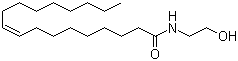
The molecule contains a long-chain monounsaturated fatty acid component (oleic acid, C18:1) linked to ethanolamine via an amide bond. This amide linkage is central to its chemical stability and biological function, as it is more resistant to hydrolysis than ester bonds but can still be enzymatically broken down by specific hydrolases. The hydrocarbon chain imparts strong hydrophobic character, while the ethanolamine headgroup provides polarity and hydrogen-bonding capability.
N-Oleoylethanolamine is part of a broader family of lipid signaling mediators that includes compounds such as anandamide (N-arachidonoylethanolamine) and palmitoylethanolamine. These molecules are often produced on demand rather than stored, and their concentrations are regulated by biosynthesis and enzymatic degradation pathways. OEA is primarily synthesized from membrane phospholipid precursors through enzymatic cleavage and subsequent amide formation.
A key biological feature of N-oleoylethanolamine is its role in regulating feeding behavior and lipid metabolism. It has been shown to act as a signaling molecule in the gastrointestinal tract, where it is produced in response to dietary fat intake. OEA activates nuclear receptor pathways, particularly peroxisome proliferator-activated receptor alpha (PPAR-α), which is involved in fatty acid oxidation and energy homeostasis. Through this pathway, it is associated with the modulation of satiety signals and lipid utilization.
In addition to nuclear receptor activation, OEA interacts indirectly with sensory and metabolic signaling systems, including vagal afferent pathways that transmit satiety-related information from the gut to the brain. These effects contribute to its role in regulating meal termination and energy intake under physiological conditions.
From a physicochemical standpoint, N-oleoylethanolamine is highly lipophilic due to its long hydrocarbon chain, with limited solubility in aqueous environments. Its amphiphilic nature arises from the balance between the hydrophobic fatty acid tail and the polar ethanolamine headgroup, enabling interactions with lipid membranes and membrane-associated proteins.
The amide bond in OEA is relatively stable under normal physiological conditions but can be hydrolyzed by specific enzymes such as fatty acid amide hydrolase (FAAH), which regulates the levels of many bioactive lipid amides. This enzymatic control is a key feature of the endocannabinoid and related lipid signaling systems, ensuring that signaling events are transient and tightly regulated.
OEA is not a classical neurotransmitter but functions more as a local lipid mediator, influencing cellular metabolism and signaling pathways rather than synaptic transmission. Its biological effects are therefore more systemic and metabolic in nature compared with fast synaptic signaling molecules.
Overall, N-oleoylethanolamine is an endogenous fatty acid ethanolamide that plays an important role in energy regulation and lipid metabolism. Its significance lies in its function as a lipid-derived signaling molecule that links dietary fat intake to satiety and metabolic control through receptor-mediated and enzyme-regulated pathways.
References
2026. Characterizing Human Oxidative, Anabolic and Glycolytic Metabolism in Athletes with Extreme Physiologies. Sports Medicine - Open.
DOI: https://www.ncbi.nlm.nih.gov/pmc/articles/PMC12972380
|








 GHS05;GHS07 Danger Details
 chemBlink Chemical Story