
Online Database of Chemicals from Around the World
| Wuhan Kemi-works Chemical Co., Ltd. | China | |||
|---|---|---|---|---|
 | www.kemiworks.net | |||
 | +86 (27) 8573-6489 | |||
 | +86 (27) 8573-6485 | |||
 | info@kemiworks.net sales@kemiworks.com | |||
| Chemical manufacturer | ||||
| chemBlink Premium supplier since 2011 | ||||
| Classification | Organic raw materials >> Carboxylic compounds and derivatives >> Carboxylic esters and their derivatives |
|---|---|
| Name | Oxydipropyl dibenzoate |
| Synonyms | Dipropylene glycol dibenzoate; 2-[1-(Benzoyloxy)propan-2-yloxy]propyl benzoate |
| Molecular Structure | 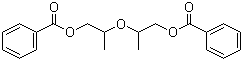 |
| Molecular Formula | C20H22O5 |
| Molecular Weight | 342.39 |
| CAS Registry Number | 27138-31-4 |
| EC Number | 248-258-5 |
| SMILES | CC(COCC(C)OC(=O)C1=CC=CC=C1)OC(=O)C2=CC=CC=C2 |
| Density | 1.1±0.1 g/cm3 Calc.* |
|---|---|
| Boiling point | 464.2±30.0 °C 760 mmHg (Calc.)* |
| Flash point | 202.3±24.6 °C (Calc.)* |
| Index of refraction | 1.542 (Calc.)* |
| * | Calculated using Advanced Chemistry Development (ACD/Labs) Software. |
| Hazard Symbols |  GHS09; Details GHS09; Details | ||||||||||||||||||||||||||||||||
|---|---|---|---|---|---|---|---|---|---|---|---|---|---|---|---|---|---|---|---|---|---|---|---|---|---|---|---|---|---|---|---|---|---|
| Risk Statements | H411-H412 Details | ||||||||||||||||||||||||||||||||
| Safety Statements | P273-P391-P501 Details | ||||||||||||||||||||||||||||||||
| Hazard Classification | |||||||||||||||||||||||||||||||||
| |||||||||||||||||||||||||||||||||
| SDS | Available | ||||||||||||||||||||||||||||||||
 chemBlink Chemical Story
|
Oxydipropyl dibenzoate is an aromatic diester belonging to the benzoate ester family. It is formed by esterification of oxydipropanol (dipropylene glycol-type alcohol structures) with benzoic acid, producing a molecule that contains two benzoate ester groups connected through an ether-containing propyl backbone. It is commonly used as a plasticizer and formulation component in polymers, adhesives, sealants, and coatings. Structurally, the molecule combines three principal elements: aromatic benzoate groups, ester linkages, and an aliphatic ether-containing chain. The benzoate portions provide hydrophobicity and increase molecular mass, while the central oxypropyl segment contributes flexibility and rotational freedom. The ether oxygen introduces additional polarity and hydrogen-bond-accepting capability without substantially increasing water solubility. The ester groups are the most electronically polarized regions of the molecule. In each benzoate unit, the carbonyl carbon is electrophilic and stabilized by resonance interactions with the neighboring oxygen atom and aromatic ring. Although the aromatic rings themselves remain chemically stable under normal conditions, the ester bonds can undergo hydrolysis under strongly acidic or strongly basic conditions to yield benzoic acid and the corresponding glycol-derived alcohol. From a materials science perspective, oxydipropyl dibenzoate is particularly important because of its function as a plasticizer. Plasticizers are additives incorporated into polymers to reduce intermolecular attractions between polymer chains. By inserting themselves between chains, they increase molecular mobility, improve flexibility, lower glass transition temperatures, and enhance processing characteristics. Compared with smaller and more volatile compounds, oxydipropyl dibenzoate has a relatively high molecular weight and low volatility, making it useful in applications where migration and evaporation resistance are desirable. These properties contribute to long-term material performance in coatings, adhesives, and polymer formulations. The ether-containing backbone gives the molecule conformational flexibility, allowing it to interact efficiently with polymer matrices. Meanwhile, the aromatic benzoate groups contribute compatibility with a broad range of resin systems. The balance between rigid aromatic units and flexible aliphatic segments is an important factor in its plasticizing behavior. Physicochemically, oxydipropyl dibenzoate is generally a hydrophobic organic liquid with low water solubility and good solubility in many organic systems. The ester and ether oxygen atoms introduce moderate polarity, allowing favorable interactions with polar polymer components while maintaining compatibility with less polar environments. Benzoate ester plasticizers such as oxydipropyl dibenzoate have gained attention as alternatives in various industrial applications because they can provide favorable performance characteristics, including flexibility, lower volatility, and effective resin compatibility. In industrial chemistry, compounds of this type are used in formulations involving polyvinyl chloride (PVC), adhesives, caulks, latex systems, and specialty coatings. Their role is primarily functional rather than chemically reactive, serving to optimize the physical properties of the final material. Overall, oxydipropyl dibenzoate is an aromatic diester composed of benzoate groups attached to a flexible oxypropyl backbone. Its significance lies in its utility as a plasticizer and formulation additive, where its structural balance of aromatic rigidity and ether-mediated flexibility provides improved material processing and performance characteristics. |
| Market Analysis Reports |