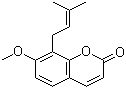
Osthole is a naturally occurring coumarin derivative found in several plants, notably in Cnidium monnieri (commonly known as the Chinese herb She Chuang Zi) and Angelica archangelica. It has been used for centuries in traditional Chinese and Ayurvedic medicine for its wide-ranging medicinal properties. The structure of osthole consists of a coumarin backbone with a distinctive 2,3-dihydro-1H-pyrrolo[3,4-b]quinolin-1-one ring system, making it a unique and bioactive compound. Its potential therapeutic effects have drawn the interest of researchers, leading to extensive studies in the fields of pharmacology, chemistry, and medicine.
The discovery of osthole dates back to the 19th century when it was first isolated from Cnidium monnieri. Since then, its chemical structure has been elucidated, and its various bioactive properties have been thoroughly explored. As a naturally occurring phytochemical, osthole is present in several other plants, including some species of citrus fruits and wild plants. However, it is predominantly extracted from Cnidium monnieri, where it is found in the seeds and fruits.
Osthole has a wide array of biological activities, including anti-inflammatory, antioxidant, antimicrobial, anticancer, and neuroprotective effects, which have made it a subject of considerable interest for its potential therapeutic uses. The compound has demonstrated significant anti-inflammatory effects by inhibiting pro-inflammatory mediators such as cytokines and cyclooxygenase enzymes (COX). This makes osthole potentially useful in managing inflammatory conditions like arthritis and other inflammatory diseases.
In addition to its anti-inflammatory properties, osthole has shown considerable antioxidant activity. It scavenges free radicals and reduces oxidative stress, which helps protect cells and tissues from damage caused by oxidative injury. This has implications for the prevention and treatment of age-related diseases, cardiovascular diseases, and neurodegenerative disorders, where oxidative damage is a key factor.
Osthole's potential anticancer activity is also a subject of growing interest. Research has shown that osthole can induce apoptosis (programmed cell death) in various cancer cell lines, including breast, lung, and liver cancer cells. It does so by modulating key signaling pathways involved in cell survival and proliferation, such as the PI3K/Akt and MAPK pathways. Moreover, osthole has demonstrated the ability to inhibit the metastasis of cancer cells, making it a promising candidate for adjunctive cancer therapies.
The neuroprotective effects of osthole are another area of active research. Studies have suggested that osthole can cross the blood-brain barrier and protect neurons from oxidative stress and excitotoxicity, which are contributing factors in neurodegenerative diseases like Alzheimer's and Parkinson's disease. Osthole has been shown to reduce amyloid-beta deposition, a hallmark of Alzheimer's disease, and improve cognitive function in animal models. Its potential as a neuroprotective agent has prompted further investigation into its role in preventing or slowing the progression of neurodegenerative diseases.
Osthole has also demonstrated significant antimicrobial properties, exhibiting activity against a variety of bacteria and fungi. This makes it a potential candidate for the development of natural antimicrobial agents to combat infections, especially in light of the increasing resistance to conventional antibiotics.
Beyond its pharmacological effects, osthole has applications in the agricultural and cosmetic industries. In agriculture, it is sometimes used as a natural pesticide due to its insecticidal and antimicrobial properties. In cosmetics, osthole's antioxidant and anti-inflammatory effects have made it an ingredient of interest for formulations aimed at reducing skin aging, inflammation, and oxidative damage.
Despite its broad spectrum of biological activities, the clinical use of osthole has been limited by its bioavailability. Like many natural compounds, osthole is poorly absorbed in the body when taken orally, which can limit its therapeutic effectiveness. Researchers are investigating various methods to improve the bioavailability of osthole, such as developing nanoformulations and combining it with other compounds that enhance its absorption.
In conclusion, osthole is a promising natural compound with a diverse range of pharmacological activities. Its anti-inflammatory, antioxidant, anticancer, and neuroprotective properties make it an attractive candidate for the development of therapeutic agents in the treatment of various diseases. With continued research and the development of better delivery systems, osthole may become a valuable addition to modern medicine, complementing traditional uses and offering novel solutions to contemporary health challenges.
References
2024. Synthesis and Importance of Coumarin Derivatives in Medicinal Chemistry: A Comprehensive Review. Russian Journal of Bioorganic Chemistry.
DOI: 10.1134/s1068162024050108
2024. Anticancer potential of osthole: targeting gynecological tumors and breast cancer. Pharmacological reports : PR.
DOI: 39617816
2024. Phytochemicals with anticancer activity from poisonous plants: potential leads for cancer therapy. Phytochemistry Reviews.
DOI: 10.1007/s11101-024-10025-1
|






 GHS07 Warning Details
 chemBlink Chemical Story