
Online Database of Chemicals from Around the World
| BOC Sciences | USA | |||
|---|---|---|---|---|
 | www.bocsci.com | |||
 | +1 (631) 485-4226 | |||
 | +1 (631) 614-7828 | |||
 | info@bocsci.com | |||
| Chemical manufacturer | ||||
| chemBlink Standard supplier since 2010 | ||||
| Alfa Chemistry | USA | |||
|---|---|---|---|---|
| www.alfa-chemistry.com | |||
| +1 (516) 734-6573 | |||
| +1 (516) 927-0118 | |||
| support@alfa-chemistry.com | |||
| Chemical manufacturer since 2005 | ||||
| chemBlink Standard supplier since 2012 | ||||
| Suizhou Jiake Pharmaceutical & Chemical Industry Co., Ltd. | China | |||
|---|---|---|---|---|
| www.0722jk.com | |||
| +86 (722) 363-2789 | |||
| +86 (722) 325-5139 | |||
| szjk0722@live.cn | |||
 | QQ Chat | |||
| Chemical manufacturer since 2011 | ||||
| chemBlink Standard supplier since 2013 | ||||
| Typu Group | China | |||
|---|---|---|---|---|
| www.typugroup.com | |||
| +86 85220966 | |||
| order@typugroup.com | |||
| Chemical distributor since 2008 | ||||
| chemBlink Standard supplier since 2021 | ||||
| Shandong Zhishang Chemical Co., Ltd. | China | |||
|---|---|---|---|---|
| www.zhishangchemical.com | |||
| +86 17653113209 13065062079 | |||
| sales001@sdzschem.com sales002@sdzschem.com | |||
| QQ Chat | |||
| Chemical manufacturer since 2016 | ||||
| chemBlink Standard supplier since 2022 | ||||
| Shandong Look Chemical Co., Ltd. | China | |||
|---|---|---|---|---|
| www.sdlookchem.com | |||
| +86 17653113219 | |||
| sales01@sdlookchem.com | |||
| QQ Chat | |||
| Chemical distributor since 2016 | ||||
| chemBlink Standard supplier since 2022 | ||||
| Hebei Shenghang New Material Co., Ltd. | China | |||
|---|---|---|---|---|
| shnewmaterial.en.ecplaza.net | |||
| +86 17336763539 | |||
| 1914232239@qq.com | |||
| QQ Chat | |||
| Chemical distributor since 2021 | ||||
| chemBlink Standard supplier since 2022 | ||||
| Xiamen WangQin Chemical Technology Co., Ltd. | China | |||
|---|---|---|---|---|
| www.resin-wq.com | |||
| +86 (592) 579-6154 | |||
| lias@xmcontinent.com | |||
| Chemical manufacturer since 2010 | ||||
| chemBlink Standard supplier since 2026 | ||||
| Classification | Catalysts and additives >> Polymer |
|---|---|
| Name | Carbomer |
| Synonyms | Carbopol |
| Molecular Structure | 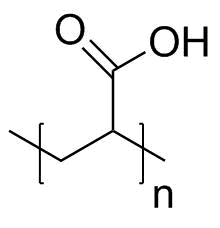 |
| Molecular Formula | (C3H4O2)n |
| Molecular Weight | ~1250000 |
| CAS Registry Number | 9007-20-9 (54182-57-9) |
| EC Number | 618-435-5 |
| SMILES | CCC(O)=O |
| Density | 1.3±0.1 g/cm3 Calc.* |
|---|---|
| Boiling point | 502.0±45.0 °C 760 mmHg (Calc.)* |
| Flash point | 257.4±28.7 °C (Calc.)* |
| Index of refraction | 1.619 (Calc.)* |
| * | Calculated using Advanced Chemistry Development (ACD/Labs) Software. |
| Hazard Symbols |   GHS05;GHS07 Danger Details GHS05;GHS07 Danger Details |
|---|---|
| Risk Statements | H302-H314 Details |
| Safety Statements | P264-P270-P271-P280-P303+P361+P353-P304+P340-P305+P351+P338-P310-P330-P331-P363-P403+P233-P501 Details |
| Transport Information | UN 3265 |
| SDS | Available |
 chemBlink Chemical Story
|
Carbomer, CAS 9007-20-9, is a generic name associated with high-molecular-weight, crosslinked polymers based primarily on acrylic acid. Unlike a small organic molecule with one precisely defined molecular structure, carbomer represents a family of polymeric materials whose properties depend on factors such as crosslinking chemistry, crosslink density, molecular architecture, and manufacturing process. These differences have produced numerous pharmaceutical and personal-care grades, but they share one particularly useful ability: a surprisingly small amount of polymer can transform water into a thick gel. The chemistry behind this behavior begins with poly(acrylic acid). Along a carbomer polymer network are large numbers of carboxylic acid groups. In the dry acidic state, the polymer chains are relatively compact. When carbomer is dispersed in water and appropriately neutralized, many of these groups become negatively charged carboxylates. Like charges repel one another, causing the polymer network to expand. At the same time, the highly hydrophilic groups interact strongly with water. The result is dramatic swelling and a large increase in viscosity. Instead of simply dissolving like an ordinary small molecule, the crosslinked polymer expands throughout the liquid and restricts the movement of water. At suitable concentrations and formulation conditions, a free-flowing liquid can become a clear or translucent gel. This behavior made carbomers extraordinarily useful in formulation science. They are widely employed as rheology modifiers, thickeners, suspending agents, and stabilizers in pharmaceutical and personal-care formulations. Gels, creams, lotions, topical medicines, and other water-based products can use carbomer to control how easily a formulation pours, spreads, remains on a surface, or keeps suspended ingredients from settling. The amount required can be remarkably small. Because a crosslinked polymer network occupies a very large effective volume after swelling, relatively low concentrations can produce substantial changes in viscosity. This is one reason ingredient labels may contain a component present in only a small proportion even though it has a major influence on how the entire product feels and behaves. Carbomer also became important in pharmaceutical technology. Pharmaceutical-grade carbomers have been used in topical gels and ointments and in oral dosage forms. Their functions extend beyond simple thickening. Depending on polymer grade and formulation, carbomers can contribute to mucoadhesion and controlled drug release. A hydrated polymer network can slow movement of dissolved molecules, while interactions between the polymer and biological surfaces can help a dosage form remain at a desired location. Commercial carbomers are not all identical. Carbomer homopolymers may consist of acrylic acid polymers crosslinked with materials such as allyl sucrose or allyl pentaerythritol. Different grades are classified partly according to viscosity and other performance characteristics. FDA substance records associated with CAS 9007-20-9 include several carbomer homopolymer types, illustrating why the CAS number should be understood as representing a polymer family rather than one perfectly uniform molecular species. Manufacturing history has also become important. Some older carbomer processes used benzene as a polymerization solvent. Because benzene is a known human carcinogen, pharmaceutical regulators have encouraged movement away from carbomer grades manufactured using benzene where residual contamination could be a concern. Modern pharmaceutical grades can instead be manufactured using alternative solvents such as ethyl acetate. This change illustrates how an established excipient can evolve through improvements in manufacturing chemistry even when its basic function remains unchanged. Carbomer is therefore an excellent example of how polymer architecture can amplify molecular behavior. A single carboxylic acid group interacting with water produces little that can be seen with the naked eye. Connect enormous numbers of those groups into a crosslinked macromolecular network, allow them to ionize and repel one another, and the collective effect can reorganize an entire container of liquid. That is why carbomer appears so often in products whose texture consumers take for granted. The smooth gel that stays on the skin instead of running away, the cream that spreads predictably, or the pharmaceutical formulation that releases an ingredient gradually may all depend on an invisible three-dimensional polymer network. Carbomer demonstrates one of the central lessons of polymer science: sometimes a tiny amount of material can control the behavior of almost everything around it. References 1. Lubrizol Life Science. Polymers for Pharmaceutical Applications. Carbopol polymers are described as high-molecular-weight, crosslinked acrylic acid-based polymers. Lubrizol Pharmaceutical Bulletin 2. Lubrizol Life Science. Pharmaceutical Excipients Guide. Applications of pharmaceutical-grade carbomers in rheology modification, mucoadhesion, controlled release, and topical formulations. Lubrizol Pharmaceutical Excipients Guide 3. U.S. Food and Drug Administration. Global Substance Registration System: Carbomer Homopolymer, CAS 9007-20-9. FDA GSRS Carbomer Record 4. U.S. Food and Drug Administration. Frequently Asked Questions on Benzene Contamination in Drugs. Guidance concerning carbomers manufactured using benzene. FDA Benzene Contamination Information |
| Market Analysis Reports |