
Online Database of Chemicals from Around the World
| Simagchem Corporation | China | |||
|---|---|---|---|---|
 | www.simagchem.com | |||
 | +86 13806087780 | |||
 | +86 (592) 268-0237 | |||
 | sale@simagchem.com | |||
| Chemical manufacturer since 2002 | ||||
| chemBlink Standard supplier since 2008 | ||||
| Shanghai Dongyue Biochem Co., Ltd. | China | |||
|---|---|---|---|---|
| www.dybiochem.com | |||
| +86 (21) 6410-9415 | |||
| sales@dybiochem.com | |||
| Chemical manufacturer | ||||
| chemBlink Standard supplier since 2008 | ||||
| Discovery Fine Chemicals Ltd. | UK | |||
|---|---|---|---|---|
| www.discofinechem.com | |||
| +44 (1202) 874-517 | |||
| +44 (845) 094-4385 | |||
| pjc@discofinechem.com | |||
| Chemical manufacturer | ||||
| chemBlink Standard supplier since 2009 | ||||
| BOC Sciences | USA | |||
|---|---|---|---|---|
| www.bocsci.com | |||
| +1 (631) 485-4226 | |||
| +1 (631) 614-7828 | |||
| info@bocsci.com | |||
| Chemical manufacturer | ||||
| chemBlink Standard supplier since 2010 | ||||
| Luxembourg Bio Technologies Ltd. | Israel | |||
|---|---|---|---|---|
| www.peptide-and-dna.com | |||
| +972 (8) 946-6040 | |||
| marina@luxembourg.co.il | |||
| Chemical manufacturer | ||||
| chemBlink Standard supplier since 2012 | ||||
| EOS Med Chemical | China | |||
|---|---|---|---|---|
| www.eosmedchem.com | |||
| +86 (531) 6990-5422 +86 18354147588 | |||
| +86 (531) 6990-5422 | |||
| info@eosmedchem.com | |||
 | QQ Chat | |||
| Chemical manufacturer since 2008 | ||||
| chemBlink Standard supplier since 2014 | ||||
| Shanghai Hongbang Medical Technology Co., Ltd. | China | |||
|---|---|---|---|---|
| www.hongbangpharma.com | |||
| +86 (21) 2428-0809 +86 13671516988 | |||
| +86 (21) 2428-0809 | |||
| kimberly-hongbangpharma@hotmail.com 1377976036@qq.com | |||
| QQ Chat | |||
| Chemical manufacturer since 2010 | ||||
| chemBlink Standard supplier since 2014 | ||||
| Hangzhou Leap Chem Co., Ltd. | China | |||
|---|---|---|---|---|
| www.leapchem.com | |||
| +86 (571) 8771-1850 | |||
| market19@leapchem.com | |||
| QQ Chat | |||
| Chemical manufacturer since 2006 | ||||
| chemBlink Standard supplier since 2015 | ||||
| Hangzhou Shilo Pharmachem Co., Ltd. | China | |||
|---|---|---|---|---|
| www.shilopharma.com | |||
| +86 15258872085 | |||
| sales@shilopharma.com | |||
| QQ Chat | |||
| Chemical manufacturer since 2015 | ||||
| chemBlink Standard supplier since 2015 | ||||
| Amadis Chemical Co., Ltd. | China | |||
|---|---|---|---|---|
| www.amadischem.com | |||
| +86 (571) 8992-5085 | |||
| +86 (571) 8992-5065 | |||
| sales@amadischem.com | |||
| Chemical manufacturer since 2010 | ||||
| chemBlink Standard supplier since 2015 | ||||
| Carbosynth China Ltd. | China | |||
|---|---|---|---|---|
| www.carbosynth.cn | |||
| +86 (512) 6260-5585 | |||
| +86 (512) 6260-5576 | |||
| sales@carbosynth.com | |||
| QQ Chat | |||
| Chemical manufacturer since 2006 | ||||
| chemBlink Standard supplier since 2016 | ||||
| Jiangsu United-value International Trading Co., Ltd. | China | |||
|---|---|---|---|---|
| www.uvcs.cn.com | |||
| +86 (519) 8988-5611 | |||
| +86 (519) 8988-5615 | |||
| luke.li@uvcs.cn.com | |||
| Chemical distributor since 2017 | ||||
| chemBlink Standard supplier since 2017 | ||||
| Suzhou Ryway Biotech Co., Ltd. | China | |||
|---|---|---|---|---|
| www.rywaybio.com | |||
| +86 18013160973 +86 18551222740 | |||
| +86 (512) 6823-6973 | |||
| sales1@rywaybio.com weixz_1990@yahoo.com | |||
| QQ Chat | |||
| Chemical manufacturer since 2016 | ||||
| chemBlink Standard supplier since 2017 | ||||
| Shanghai Fuxin Pharmaceutical Co., Ltd. | China | |||
|---|---|---|---|---|
| www.fuxinpharm.com | |||
| +86 (21) 3130-0828 +86 18645121291 | |||
| +86 (21) 3130-0828 | |||
| contact@fuxinpharm.com | |||
| Chemical manufacturer since 2016 | ||||
| chemBlink Standard supplier since 2018 | ||||
| Shanghai Haohong Biomedical Technology Co., Ltd. | China | |||
|---|---|---|---|---|
| www.leyan.com | |||
| +86 4008210725 | |||
| malulu@leyan.com | |||
| QQ Chat | |||
| Chemical manufacturer since 2011 | ||||
| chemBlink Standard supplier since 2022 | ||||
| Zhejiang Boxiao Biopharmaceutical Co., Ltd. | China | |||
|---|---|---|---|---|
| www.bx-biopharm.com | |||
| +86 (571) 6328-0982 | |||
| helena_huang@bx-biopharm.com | |||
| QQ Chat | |||
| Chemical manufacturer since 2020 | ||||
| chemBlink Standard supplier since 2023 | ||||
| IRIS Biotech GmbH | Germany | |||
|---|---|---|---|---|
| www.iris-biotech.de | |||
| +49 (9231) 961-973 | |||
| +49 (9231) 961-999 | |||
| info@iris-biotech.de | |||
| Chemical manufacturer since 1788 | ||||
| Aroz Technologies, LLC | USA | |||
|---|---|---|---|---|
| www.aroztech.com | |||
| +1 (877) 818-2125 | |||
| +1 (877) 818-2129 | |||
| sales@aroztech.com | |||
| Chemical manufacturer | ||||
| Anvia Chemicals, LLC | USA | |||
|---|---|---|---|---|
| www.anviachem.com | |||
| +1 (414) 534-7845 | |||
| +1 (414) 762-5539 | |||
| sales@anviachem.com | |||
| Chemical manufacturer | ||||
| Shenzhen Hybio Engineering Co., Ltd. | China | |||
|---|---|---|---|---|
| www.hybio.com.cn | |||
| +86 (755) 2658-8000 2658-8111 2658-8021 | |||
| +86 (755) 2658-8022 | |||
| sales@hybio.com.cn | |||
| Chemical manufacturer | ||||
| AAPPTEC | USA | |||
|---|---|---|---|---|
| www.aapptec.com | |||
| +1 (888) 692-9111 (502) 968-2233 | |||
| +1 (502) 968-3338 | |||
| info@aapptec.com sales@aapptec.com | |||
| Chemical manufacturer | ||||
| Ivy Fine Chemicals | USA | |||
|---|---|---|---|---|
| www.ivychem.com | |||
| +1 (856) 465-8550 | |||
| +1 (856) 616-1161 | |||
| sales@ivychem.com | |||
| Chemical manufacturer | ||||
| Watanabe Chemical Ind., Ltd. | Japan | |||
|---|---|---|---|---|
| www.watanabechem.co.jp | |||
| +81 (82) 231-0540 | |||
| +81 (82) 231-1451 | |||
| inquiry@watanabechem.co.jp | |||
| Chemical manufacturer | ||||
| PolyPeptide Laboratories A/S | Denmark | |||
|---|---|---|---|---|
| www.polypeptide.com | |||
| +45 48207000 | |||
| +45 48207005 | |||
| ppl@polypeptide.com | |||
| Chemical manufacturer | ||||
| Whyte Chemicals | UK | |||
|---|---|---|---|---|
| www.whytechemicals.co.uk | |||
| +44 (20) 8346-5946 | |||
| +44 (20) 8349-4589 | |||
| sales@whytechemicals.co.uk | |||
| Chemical distributor | ||||
| GLSynthesis Inc. | USA | |||
|---|---|---|---|---|
| www.glsynthesis.com | |||
| +1 (508) 754-6700 | |||
| +1 (508) 754-7075 | |||
| support@glsynthesis.com | |||
| Chemical manufacturer | ||||
| BioVectra, Inc. | Canada | |||
|---|---|---|---|---|
| www.biovectra.com | |||
| +1 (902) 566-9116 (866) 883-2872 | |||
| +1 (902) 628-2045 | |||
| info@biovectra.com | |||
| Chemical manufacturer since 1970 | ||||
| Oakwood Products, Inc. | USA | |||
|---|---|---|---|---|
| www.oakwoodchemical.com | |||
| +1 (800) 467-3386 | |||
| k_weaver@oakwoodchemical.com | |||
| Chemical manufacturer | ||||
| Classification | Biochemical >> Amino acids and their derivatives >> Other protected amino acids |
|---|---|
| Name | 2-(1H-Benzotriazole-1-yl)-1,1,3,3-tetramethyluronium hexafluorophosphate |
| Synonyms | o-Benzotriazol-1-yl-N,N,N',N'-tetramethyluronium hexafluorophosphate; o-Benzotriazol-1-yl-tetramethyluronium hexafluorophosphate; HBTU |
| Molecular Structure | 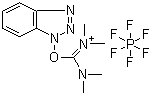 |
| Molecular Formula | C11H16N5O.PF6;C11H16F6N5OP |
| Molecular Weight | 379.24 |
| CAS Registry Number | 94790-37-1 |
| EC Number | 619-076-7 |
| SMILES | CN(C)C(=[N+](C)C)N1C2=CC=CC=C2[N+](=N1)[O-].F[P-](F)(F)(F)(F)F |
| Melting point | 200 °C (Decomposes) (Expl.) |
|---|---|
| Hazard Symbols |  GHS07 Warning Details GHS07 Warning Details | ||||||||||||||||||||||||||||||||||||||||||||||||
|---|---|---|---|---|---|---|---|---|---|---|---|---|---|---|---|---|---|---|---|---|---|---|---|---|---|---|---|---|---|---|---|---|---|---|---|---|---|---|---|---|---|---|---|---|---|---|---|---|---|
| Risk Statements | H315-H317-H319-H335 Details | ||||||||||||||||||||||||||||||||||||||||||||||||
| Safety Statements | P261-P264-P264+P265-P271-P272-P280-P302+P352-P304+P340-P305+P351+P338-P319-P321-P332+P317-P333+P317-P337+P317-P362+P364-P403+P233-P405-P501 Details | ||||||||||||||||||||||||||||||||||||||||||||||||
| Hazard Classification | |||||||||||||||||||||||||||||||||||||||||||||||||
| |||||||||||||||||||||||||||||||||||||||||||||||||
| SDS | Available | ||||||||||||||||||||||||||||||||||||||||||||||||
 chemBlink Chemical Story
|
CAS 94790-37-1 is universally known in peptide chemistry as HBTU, a benzotriazole-based coupling reagent widely used in Fmoc solid-phase peptide synthesis. HBTU activates a carboxylic acid so an amino group can attack efficiently to form an amide bond. Literature and commercial references emphasize rapid reactions, high coupling yields and relatively low racemization. A notable structural detail emerged from crystallographic and solution studies: HBTU is better represented by an aminium or guanidinium N-oxide structure than the simple 'uronium' formulation suggested by its traditional name. Repeated solid-phase peptide synthesis demands reliable activation over many cycles, explaining why HBTU became a classic workhorse. Its role is synthetic rather than biological: it facilitates peptide-bond construction and is not intended to remain in the final peptide. The exact registry identity matters because free forms, salts, hydrates, stereoisomers, metabolites, intermediates and finished medicines can have separate CAS numbers even when their names are closely related. This distinction affects molecular weight, analytical standards, formulation, manufacturing specifications and interpretation of published data. A reliable database story therefore follows the exact substance rather than silently borrowing every property of a related compound. Structure also shows how chemists use functional groups as deliberate tools. Aromatic and heterocyclic frameworks establish molecular shape and electronics, while amines, hydroxyl groups, carbonyls, carboxyl functions or ionic centers determine reactivity and intermolecular interactions. In multistep synthesis, a compound may be valuable precisely because one position can be transformed selectively while the rest of a complex framework survives. Modern development is also an analytical-control problem. Researchers must establish identity and purity, distinguish relevant stereoisomers or salt forms, monitor process-related species and define reproducible specifications. These requirements explain why an intermediate, metabolite or reagent can be scientifically important even when it is never administered as an independent medicine. A Chemical Story must distinguish documented use from structural possibility. A familiar scaffold may suggest an activity, but resemblance is not evidence that the exact CAS substance has been tested or approved for that purpose. Verified history and demonstrated applications therefore take priority over attractive but unsupported extrapolation. Seen broadly, practical performance emerges from the entire molecular system rather than one recognizable group. Structure, stereochemistry, physical form, synthetic route, metabolism and reaction environment can all determine what a substance actually does. Connecting those molecular details to its documented role is what turns a registry entry into a meaningful chemical story. The exact registry identity matters because free forms, salts, hydrates, stereoisomers, metabolites, intermediates and finished medicines can have separate CAS numbers even when their names are closely related. This distinction affects molecular weight, analytical standards, formulation, manufacturing specifications and interpretation of published data. A reliable database story therefore follows the exact substance rather than silently borrowing every property of a related compound. Structure also shows how chemists use functional groups as deliberate tools. Aromatic and heterocyclic frameworks establish molecular shape and electronics, while amines, hydroxyl groups, carbonyls, carboxyl functions or ionic centers determine reactivity and intermolecular interactions. In multistep synthesis, a compound may be valuable precisely because one position can be transformed selectively while the rest of a complex framework survives. Modern development is also an analytical-control problem. Researchers must establish identity and purity, distinguish relevant stereoisomers or salt forms, monitor process-related species and define reproducible specifications. These requirements explain why an intermediate, metabolite or reagent can be scientifically important even when it is never administered as an independent medicine. References: 1. Fields CG et al. HBTU in peptide synthesis. Pept Res. 1991;4:95. 2. Abdelmoty I et al. Structural studies of HBTU. Lett Pept Sci. 1994;1:57-67. 3. Sigma-Aldrich. HBTU, CAS 94790-37-1, peptide coupling reagent. |
| Market Analysis Reports |