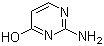
Isocytosine
CAS 108-53-2
Isocytosine helped turn the idea of an expanded genetic alphabet into an enzyme experiment.
DNA normally uses four letters, but isocytosine helped researchers test an additional pair. It has the same molecular formula as cytosine, with functional groups rearranged to change its hydrogen-bonding pattern. In landmark experiments reported in 1989 and 1990, appropriately constructed isocytosine-containing nucleic-acid components helped demonstrate polymerase recognition of a nonstandard pair with isoguanine. The free base itself is not a nucleotide: sugars, phosphates and their geometry matter. So do alternative molecular forms that can expose different recognition patterns. A new pair must fit a helix, select its intended partner and work with copying enzymes. Isocytosine shows how moving familiar chemical groups can turn a question about life's alphabet into an experiment, while leaving the harder problem of reliable repeated copying to be tested.
Published:
2026-10-19