5-Bromo-4-chloro-3-indolyl-β-D-glucuronide sodium salt is a synthetic glycoside commonly used as a chromogenic substrate for the detection of β-glucuronidase activity in biochemical and microbiological assays. The compound consists of a substituted indoxyl-based aglycone linked to a β-D-glucuronic acid moiety through a glycosidic bond, and it is isolated as a sodium salt to improve aqueous solubility and handling in buffer systems.
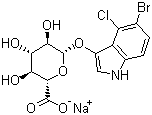
The core structural feature of the molecule is the indole-derived aromatic system, specifically a 5-bromo-4-chloro-3-indolyl group. Indole is a bicyclic heteroaromatic compound composed of a benzene ring fused to a pyrrole ring. In this derivative, the indole framework is substituted with bromine at the 5-position and chlorine at the 4-position. These halogen atoms are strongly electron-withdrawing through inductive effects and significantly influence the electronic distribution and reactivity of the aromatic system. The presence of these substituents also increases molecular mass and polarizability.
At the 3-position of the indole-derived system, the molecule is linked via an oxygen atom to a β-D-glucuronic acid unit, forming a glycosidic bond. Glucuronic acid is a sugar acid derived from glucose in which the primary alcohol group at the 6-position is oxidized to a carboxylic acid. In the β-anomeric configuration, the glycosidic linkage is oriented in a defined stereochemical arrangement that is recognized by specific enzymes such as β-glucuronidases.
The glucuronide portion contains multiple hydroxyl groups distributed along a six-membered pyranose ring, contributing strong hydrophilicity and hydrogen-bonding capability. The carboxylate group of glucuronic acid is deprotonated under physiological pH conditions, contributing anionic character to the molecule. In the sodium salt form, sodium ions serve as counterions to balance the negative charge of the glucuronate group and enhance water solubility.
The glycosidic bond linking the indolyl moiety to glucuronic acid is the key enzymatically labile feature of the molecule. β-Glucuronidase enzymes catalyze hydrolysis of this bond, releasing the aglycone portion. Upon enzymatic cleavage, the 5-bromo-4-chloro-3-indoxyl intermediate can undergo subsequent oxidation and dimerization reactions to form insoluble colored products, which is the basis of its use as a chromogenic detection system.
From a structural perspective, the molecule contains both highly hydrophilic and moderately hydrophobic regions. The glucuronide moiety provides extensive polarity due to multiple hydroxyl groups and ionic carboxylate functionality, while the substituted indole ring system contributes aromatic character and moderate hydrophobicity. The halogen substituents further increase electron density modulation and influence reactivity of the aromatic system.
Chemically, the glucuronide linkage is stable under neutral conditions but is selectively cleaved by β-glucuronidase enzymes. The indoxyl-derived aglycone is relatively stable until enzymatic hydrolysis occurs, after which it can be oxidized to form colored indigoid compounds. The halogen substituents stabilize intermediate oxidation states and influence the spectral properties of the final chromogenic product.
Overall, 5-Bromo-4-chloro-3-indolyl-β-D-glucuronide sodium salt is a water-soluble, enzyme-responsive glycoside composed of a halogenated indole-derived chromogenic aglycone linked to a β-D-glucuronic acid unit. Its primary significance lies in its role as a substrate for β-glucuronidase assays, where enzymatic cleavage produces a detectable colorimetric signal used in biochemical and microbiological analysis.
|






 GHS07 Warning Details
 chemBlink Chemical Story