(+)-Abscisic acid is a naturally occurring plant hormone belonging to the class of sesquiterpenoid compounds. It plays a central role in regulating plant growth, development, and responses to environmental stress. The compound is widely distributed in higher plants and is involved in processes such as seed dormancy, stomatal closure, and adaptation to drought conditions.
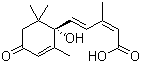
Structurally, (+)-abscisic acid is a 15-carbon sesquiterpenoid containing a cyclohexene ring substituted with multiple functional groups and an unsaturated side chain terminating in a carboxylic acid. The molecule contains a chiral center, and the naturally occurring biologically active form is the (+)-enantiomer with defined stereochemistry that is essential for its recognition by plant receptor proteins.
The core structure consists of a cyclohexene ring system bearing hydroxyl and methyl substituents. The ring contains a conjugated double bond, which contributes to partial delocalization of electron density within the cyclic portion of the molecule. Attached to this ring is a side chain containing a conjugated diene system that extends toward a terminal carboxylic acid group. This conjugation contributes to the overall electronic distribution of the molecule and influences its chemical reactivity.
The carboxylic acid functional group is the primary polar and ionizable site in the molecule. Depending on pH, it can exist in protonated or deprotonated form, enabling the molecule to participate in hydrogen bonding and ionic interactions. This functional group is also a key site for biochemical recognition and metabolism, as it can undergo conjugation reactions such as esterification in biological systems.
The hydroxyl group present on the cyclohexene ring contributes additional polarity and hydrogen-bonding capability. It can act as both hydrogen-bond donor and acceptor, influencing the molecule’s solubility and interaction with receptor proteins. The presence of this hydroxyl group is also important for the molecule’s biological activity, as structural modifications at this position can significantly alter hormonal function.
The conjugated double bond system in the side chain gives the molecule a degree of rigidity and defines its overall geometry. This unsaturation allows for electron delocalization across part of the molecule, which can influence both its chemical stability and its interaction with enzymes and receptors.
From a stereochemical perspective, the biological activity of abscisic acid is highly dependent on its three-dimensional configuration. The (+)-enantiomer corresponds to the naturally occurring active form in plants, and the spatial arrangement of substituents is critical for binding to specific ABA receptor proteins. The incorrect stereoisomer exhibits significantly reduced or altered biological activity.
Physicochemically, (+)-abscisic acid is an amphiphilic molecule, containing both hydrophobic hydrocarbon regions and polar functional groups. The hydrocarbon framework and conjugated system contribute hydrophobic character, while the carboxylic acid and hydroxyl groups contribute polarity and hydrogen-bonding capacity.
Chemically, the molecule can undergo typical reactions associated with carboxylic acids, such as esterification and salt formation. The conjugated double bonds can participate in oxidation or addition reactions under appropriate conditions, although in biological systems the molecule is relatively stable and functions primarily as a signaling compound rather than a reactive metabolite.
Overall, (+)-abscisic acid is a stereospecific plant hormone composed of a cyclohexene-based sesquiterpenoid skeleton with a conjugated side chain terminating in a carboxylic acid. Its biological activity is strongly dependent on its defined stereochemistry and functional groups, which enable it to regulate key physiological processes in plants through specific receptor-mediated signaling pathways.
References
2026. Evolutionary-based remodeling of ABA receptors reveals the structural basis of hormone perception and regulation. Proceedings of the National Academy of Sciences of the United States of America.
DOI: 10.1073/pnas.2534140123
2026. Identification of xylan acetylation-related trichome birefringence-like family genes reveals the roles of ZmTBL20 in resistance to southern corn leaf blight. Phytopathology Research.
DOI: 10.1186/s42483-026-00412-1
|







 GHS09 Warning Details
 chemBlink Chemical Story